Truck accidents leave a different kind of silence. The road feels too still, headlights glare through smoke, and you hear engines idling somewhere behind you. You step out, heart pounding, wondering how something that large hit so fast.
What you have to do in the first few minutes and hours after that impact in a truck accident will matter more than anything else that follows.
Our Florida truck accident attorneys at MANGAL, PLLC explain the exact steps to protect yourself, preserve evidence, and prepare your claim from day one.
Step 1. Make sure everyone is safe and get medical help

You have to stop and take a breath. The sound settles, but the danger might still be there. Look around before you move. Truck accidents often leave glass, metal, or leaking fuel on the road.
- If it’s safe, step away from traffic and switch on your hazard lights.
- Check your passengers and anyone else nearby.
- Don’t rush to move injured people unless there’s a fire or fuel leak.
Once done with the above, call 911 ASAP. You have to tell the dispatcher that it is a truck accident so they send the right units. Florida law requires that crashes involving commercial vehicles be reported. It is something recommended when someone is hurt in the truck accident crash.
Do not stay silent or hide your injuries. Internal or spinal injuries can stay hidden at first. Let the paramedics check you. If they advise a hospital visit, you will have to follow through then. That first medical report links your injuries directly to the crash.
Stay put until the police arrive. Their report will include the time, place, vehicles, witnesses and the details that build the base of your entire case.
Step 2. Gather evidence and document everything

Truck companies act quickly after a crash. Their investigators and lawyers often arrive before you’ve even left the scene. That’s why gathering your own evidence right away is so important. Details fade fast, and once they’re gone, you can’t get them back.
If it’s safe, start collecting what you can:
- Take clear photos from several angles. Capture the truck, your car, the road, skid marks, and any scattered debris or cargo.
- Photograph the truck’s license plate, company name, and the USDOT number printed on the door.
- Get the driver’s full name, contact information, commercial license number, and insurance details.
- Write down the trucking company’s name, its headquarters location, and any subcontractor listed on the trailer.
- Speak to witnesses before they leave. Note their phone numbers and what they saw.
- If you can’t move because of injuries, ask someone nearby to take photos or videos for you.
These small actions can make or break your claim later. Every photo, name, and note helps lock in the truth before it disappears.
Step 3. Notify your insurer, but be careful what you say

After you have seen a doctor, then call your insurance company and report the crash. Keep it simple and stick to facts like where it happened, who was involved, and that a commercial truck was part of it.
Don’t share opinions or guesses. Avoid saying things like “I’m fine” or “It was my fault.” Those words can be twisted later.
If the trucking company’s insurer contacts you, don’t give a recorded statement or sign papers. Tell them your Florida truck accident lawyer will handle communication. Truck accidents usually involve several insurers, and one wrong word can hurt your claim. Having legal help early keeps you protected.
Step 4. Understand how Florida law handles truck accidents

Truck accidents in Florida are treated differently from car accidents as the weight, laws and everything differs from the two. The truck driver isn’t always the only one responsible. Their employer, the trucking company, the vehicle’s maintenance provider, or even the cargo shipper can share fault. Which is why we need to find out about who is liable.
Florida’s comparative fault rule means that if you’re found more than 50 percent responsible for the crash then you can not recover damages. Evidence becomes crucial due to this.
The law also gives you two years from the date of the accident to file a personal injury lawsuit. That may sound like plenty of time, but evidence disappears fast. Trucking companies can legally erase electronic logs and GPS data after a few weeks unless your lawyer sends a preservation letter to stop it.
Knowing these rules early helps protect your right to full compensation before deadlines or evidence slip away.
Step 5. Build your case while you recover

After you’ve reported the crash and started treatment, focus on healing — but also start documenting everything connected to your recovery.
Keep copies of every medical bill, prescription, and doctor’s note. Write down the days you missed work and any daily pain or mobility issues. Save towing and rental car receipts. This record shows how the crash affected your life beyond the hospital.
Your truck accident attorney will collect the rest — trucking logs, black box data, dash-cam footage, and maintenance records. These documents reveal whether the driver was speeding, driving too long without rest, or operating a poorly maintained truck.
Most truck cases settle before trial once evidence is clear. But preparation is what gives you leverage. The stronger your file, the faster insurers offer fair compensation.
Step 6. Why truck accidents in Clermont and Central Florida are different

Central Florida sees more truck traffic than most parts of the state. Major roads like I-4, US-27, and State Road 50 stay packed with freight haulers and long-distance drivers. That constant movement, mixed with smaller cars and sudden weather changes, creates dangerous conditions.
In Clermont, the biggest risks come at highway interchanges and loading areas where trucks merge or back up. Visibility drops, especially when there’s rain, glare, or fog. Even a small mistake can lead to a multi-vehicle crash.
A few key facts make these accidents different:
- Many trucks are owned by out-of-state companies, which means more insurers and multiple jurisdictions.
- Trucking cases fall under federal and state regulations, not just Florida traffic law.
- Critical evidence, like electronic logs, GPS data, and cargo records, can disappear within days if not preserved.
Because of this, truck accidents in Central Florida need fast investigation. The sooner a Clermont truck accident lawyer steps in, the easier it is to protect black-box data, witness information, and maintenance records before they’re deleted or changed.
Step 7. What your lawyer does after you hire them
Once you hire a lawyer, the process shifts from reaction to strategy. Your attorney begins by sending preservation letters to the trucking company and its insurer. This forces them to save black box data, maintenance logs, and driver schedules before they can delete or alter them.
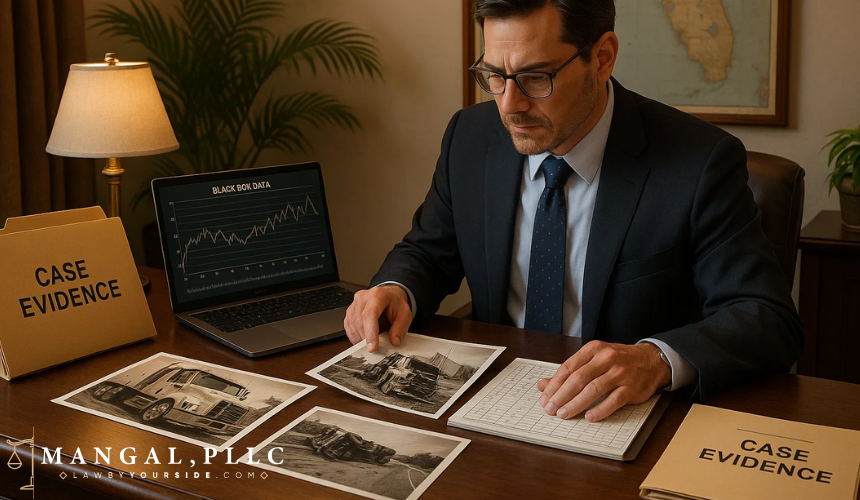
Next, your lawyer works with investigators and experts to reconstruct the crash. They review the driver’s hours-of-service records, GPS data, and any history of prior violations. In many cases, negligence comes down to fatigue, overloaded cargo, or poor maintenance.
Medical documentation is then organized to connect every injury directly to the crash. This evidence package is what drives settlement negotiations — a clear timeline of what happened, who caused it, and what it cost you.
The goal isn’t just compensation; it’s full accountability. When trucking companies cut corners, their negligence puts everyone on Florida roads at risk. Holding them responsible helps prevent the next crash.
Step 8. Why you shouldn’t delay getting help
Truck companies move fast after a crash. Their insurers start collecting photos and witness statements while you’re still in the hospital. Every day you wait, they get further ahead.

Delaying medical care or reporting the accident can hurt your claim. It gives the other side room to argue that your injuries aren’t serious or unrelated.
Getting a truck accident lawyer involved early keeps the evidence safe, the witnesses reachable, and your rights protected. It also frees you to focus on recovery instead of chasing paperwork.
Even if you’re unsure about your case, a quick consultation with our Florida personal injury attorneys can help you understand your options.
Frequently Asked Questions
Do I have to move my vehicle after a truck crash?
Only if it’s safe and you’re physically able. If there’s fuel, debris, or injuries, stay put and wait for police to arrive. Moving your vehicle too soon can also complicate accident reconstruction later.
What information should I get from the truck driver?
Ask for the driver’s name, phone number, commercial license number, insurance details, and employer information. Write down the truck’s plate number, trailer number, and the company name printed on the side.
Should I talk to the trucking company’s insurance adjuster?
No. Their job is to limit what they pay. Anything you say can be taken out of context. Refer all communication to your lawyer once you have representation.
Can I still file a claim if I’m partly at fault?
Yes, but under Florida’s comparative fault system, your compensation is reduced by your percentage of fault. If you’re found more than 50% responsible, you can’t recover damages.
What if the truck driver was from another state?
That’s common in Florida. You can still file a claim here if the crash happened in the state. Your attorney will coordinate with out-of-state insurers and federal regulators if needed.
How long do I have to file a claim?
You generally have two years from the date of the accident. But truck evidence such as black box data or logbooks can be destroyed within weeks. The sooner your lawyer acts, the stronger your case will be.
Do truck accidents usually go to court?
Not always. Many are settled once the trucking company sees strong evidence of fault. Cases go to court mainly when insurers deny liability or refuse fair compensation.
What can I recover in a Florida truck accident claim?
Medical bills, lost income, future medical care, pain and suffering, property damage, and in some cases, punitive damages if the company acted recklessly — such as forcing drivers to exceed legal hours.
Ready to Talk to a Truck Accident Lawyer in Clermont, Florida?
If you’ve been injured in a truck crash anywhere in Clermont or Central Florida, don’t try to handle it alone. Trucking companies have lawyers on call 24/7. You deserve the same level of protection.
At MANGAL, PLLC, our Florida truck accident attorneys know how to take on commercial carriers, investigate federal compliance issues, and fight for full compensation for victims and their families.
We help you understand your rights, preserve evidence, and pursue justice with no upfront fees. You only pay when we win your case.
Truck accidents are complicated, but finding help doesn’t have to be. Acting quickly makes your case stronger and gets you closer to recovery.