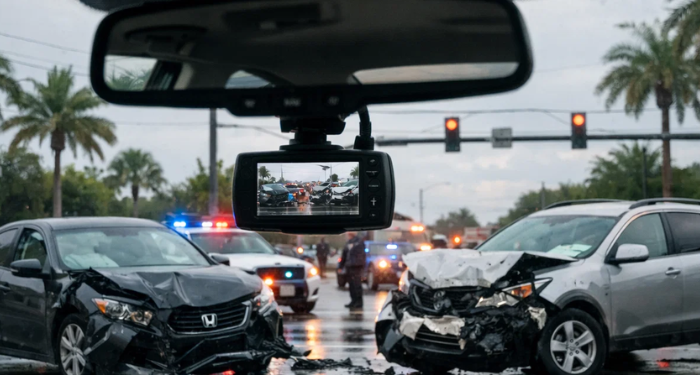
You notice it at the worst possible time. You are backing out of the driveway before work, or pulling into a parking lot after dark, and a reflection catches your eye. One headlight is out.
Most people have the same two questions right away:
Is driving with one headlight illegal, and can you drive with one headlight just long enough to get home or get it fixed?
In Florida, this is more than an inconvenience. It can lead to a traffic stop, a citation, and if a crash happens, it can become an issue in an insurance claim. A car accident attorney at MANGAL, PLLC, can help when a simple equipment problem turns into a serious liability fight.
Is driving with one headlight illegal in Florida?

In most situations, yes. Florida law requires motor vehicles to be equipped with at least two headlamps, with at least one on each side of the front of the vehicle.
When one headlight is burned out, your vehicle is no longer meeting that “two headlamps” requirement in a real-world, functional sense. That is why drivers regularly get pulled over for a single headlight being out.
Florida also spells out the consequence: a violation of this headlamp requirement is a noncriminal traffic infraction, punishable as a nonmoving violation.
So while this is not a criminal charge, it is still a traffic violation that can cost you time and money and create complications if you are involved in a collision.
Can you drive with one headlight during the day?
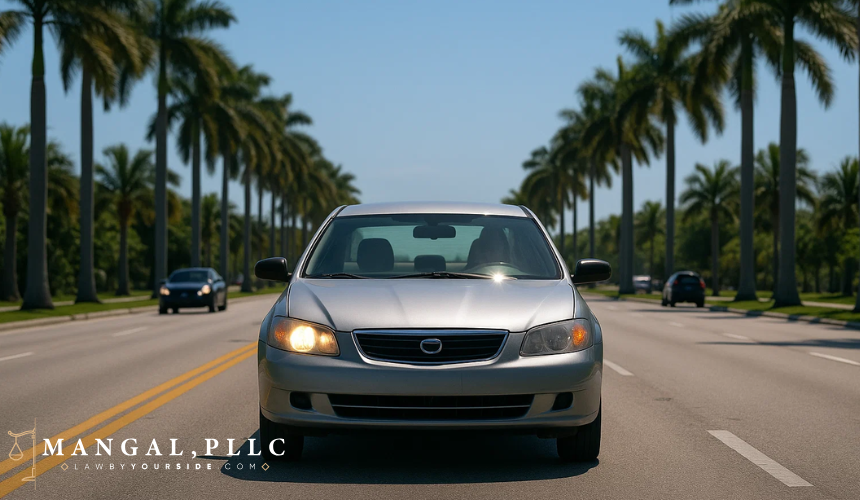
This is where people get tripped up. Even if it is daytime and you are not required to have headlights on, the vehicle still has to be properly equipped under Florida’s headlamp statute.
That said, the risk of being stopped tends to go up when the missing headlight creates an obvious safety issue, like low light, rain, or heavy traffic. The bigger danger is not only the ticket. It is the crash risk and what happens afterward.
If you have to move the vehicle, the safest approach is usually to drive directly to a repair location as soon as possible and avoid night driving or bad weather until it is fixed. (This is practical guidance, not legal advice for your specific situation.)
When are headlights required in Florida?

Separate from the “two headlamps” rule, Florida has a law that tells drivers when lamps must be lighted on the road.
Florida requires lighted lamps:
And Florida treats a violation of this “lamps required” rule as a noncriminal traffic infraction punishable as a moving violation.
This matters because a driver with one headlight out at night or in rain is not just risking an equipment ticket. They may also be operating in conditions where visibility is reduced and the law expects properly lighted lamps.
What if it is a motorcycle with one headlight?

Motorcycles are handled differently than passenger vehicles in Florida.
Florida law says a motorcycle or motor-driven cycle must be equipped with at least one and not more than two headlamps.
Florida also requires motorcycle headlights to be turned on while operating on public streets and highways (and includes additional language about how violations may be treated in civil cases).
So, if someone asks “can you drive with one headlight” and they are talking about a motorcycle, the analysis can be different than a standard car or truck.
What happens if you get pulled over for one headlight?

Most stops for a headlight-out situation are straightforward. The officer confirms the equipment issue and may issue a citation for the headlamp violation. Under the headlamp statute, Florida labels it a noncriminal infraction punishable as a nonmoving violation.
Whether you receive a warning or a ticket often comes down to the circumstances and the officer’s discretion, including:
- How dark it is or whether weather is poor
- Whether the headlight appears intentionally modified
- Whether the vehicle has other equipment issues
If you are stopped, keep it simple:
- Be polite and factual
- Do not guess or argue on the roadside
- Fix the issue quickly
Can a headlight being out affect who is at fault in a crash?
Yes, it can. Even though a headlight-out issue might feel minor, insurance companies love “simple” arguments that shift blame.
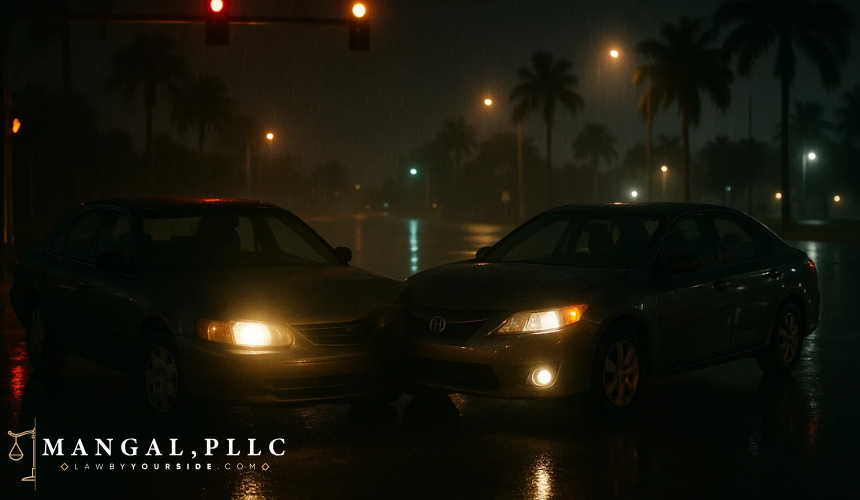
Here is what commonly happens after a crash:
- The other driver (or their insurer) claims they could not see you clearly
- They argue your missing headlight reduced visibility or made it harder to judge distance
- They use that as a reason to assign you some percentage of fault
And in Florida, that percentage matters more than many people realize.
Florida’s comparative fault statute provides that if a party is found greater than 50% at fault for their own harm in a negligence action, they may not recover damages.
Even if you are less than 50% at fault, your recovery can be reduced proportionately.
So a missing headlight can become part of a bigger fight about responsibility, especially in:
- Nighttime intersection crashes
- Left-turn collisions
- Lane-change sideswipes
- Rainy or foggy conditions
This is one of the reasons it is smart to speak with a car accident attorney early if a headlight issue is being brought up against you.
If the other driver had one headlight out, does that help your case?
Potentially, yes, but you still have to prove it mattered.

If the other driver’s headlight was out, it may support arguments like:
- They were harder to see
- Their visibility was reduced
- Their conduct contributed to the collision
But insurance companies often counter with “you should have seen them anyway.” That is why documentation is everything. If it is safe, try to capture:
- Photos of the front of the vehicle showing the headlight out
- Dashcam footage
- Witness contact info
- The crash report number
A Florida car accident attorney can help preserve evidence and frame the issue properly so it does not get brushed aside as “just a bulb.”
What should you do if your headlight goes out while you are driving?

If you realize a headlight is out while you are already on the road, prioritize safety:
- If it is dark or raining, get to a safe place to stop as soon as you can. Florida requires lighted lamps during those conditions.
- Replace the bulb if you can do it safely, or head directly to a repair shop.
- Avoid “pushing it” for days. The longer you drive like that, the greater the risk of a stop or a crash.
Frequently Asked Questions (FAQs)
Is driving with one headlight illegal in Florida?
Florida requires motor vehicles to be equipped with at least two headlamps, and violations are treated as noncriminal traffic infractions.
Can you drive with one headlight to get it fixed?
Practically, many people do, but it can still expose you to a stop and a citation under Florida’s headlamp law. The safest choice is to fix it immediately and avoid night or rain driving.
When do headlights have to be on in Florida?
From sunset to sunrise (including twilight hours) and during any rain, smoke, or fog.
Does Florida treat “headlights required” as a moving violation?
Yes. Florida’s “when lighted lamps are required” statute provides that a violation is a noncriminal traffic infraction punishable as a moving violation.
Can a headlight-out issue reduce my injury compensation after a crash?
It can, because insurers may argue comparative fault. Florida law can bar recovery if a party is found greater than 50% at fault.
When should you call a car accident attorney?
If your crash happened at night, during rain, or under any conditions where visibility is being questioned, do not assume the insurance company will see things your way. Adjusters often seize on small details, like a headlight issue, to shift blame and reduce what they pay, even when their insured caused the crash.

At MANGAL, PLLC, we know how these arguments work and how to shut them down. Our team steps in early to protect your statement, preserve critical evidence, and challenge unfair fault claims before they cost you compensation. When injuries are involved, we focus on the full impact of the crash and fight for the recovery Florida law allows, not the shortcut settlement the insurer prefers.