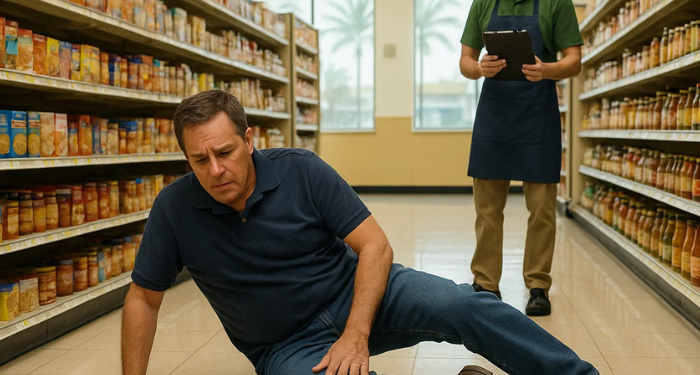
A slip and fall is a type of accident caused by hazardous conditions like wet floors or uneven surfaces. Premises liability is the broader area of law that holds property owners responsible for unsafe conditions. In Florida, slip and fall cases fall under premises liability law.
Premises Liability vs. Slip and Fall: Key Differences Explained
Walk into any Florida personal injury conversation and you’ll hear “premises liability” and “slip and fall” treated as synonyms. They aren’t.
| Premises Liability | Slip and Fall |
|---|---|
| Area of law | Type of accident |
| Covers all property-related injuries | Covers falls caused by hazards |
| Includes multiple claim types | One specific claim type |
| Focuses on legal responsibility | Focuses on the incident |
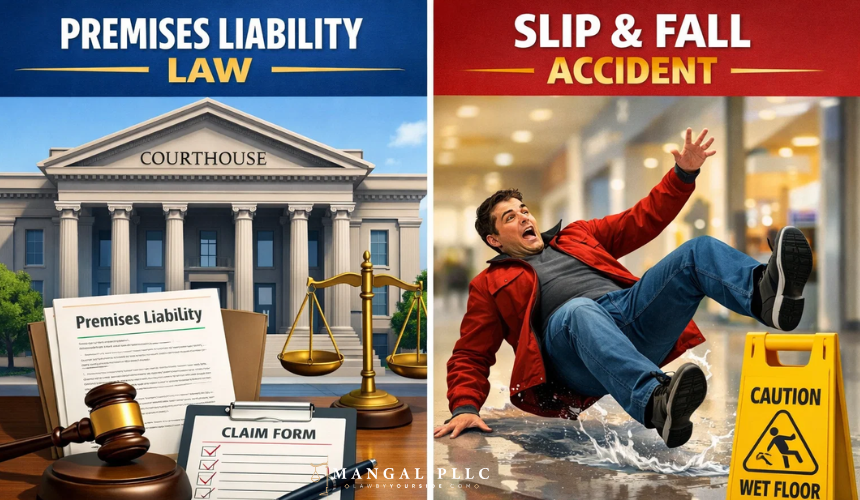
Quick clarification:
- Slip and fall = a type of accident
- Premises liability = the law that governs that accident
Think of premises liability as the umbrella and slip and fall as one of the many situations that fall underneath it.
Why does the distinction matter? Because it changes what you have to prove, who you can hold responsible, and what kind of compensation is available. If you’ve been hurt on someone else’s property in Florida, understanding how the law classifies your injury is the first step toward protecting your rights. For help navigating these claims, contact a trusted Florida slip and fall lawyer.
In simple terms: A slip and fall is one type of premises liability claim under Florida law.
What Is Premises Liability in Florida?
Premises liability means property owners are legally responsible for injuries caused by unsafe conditions on their property.
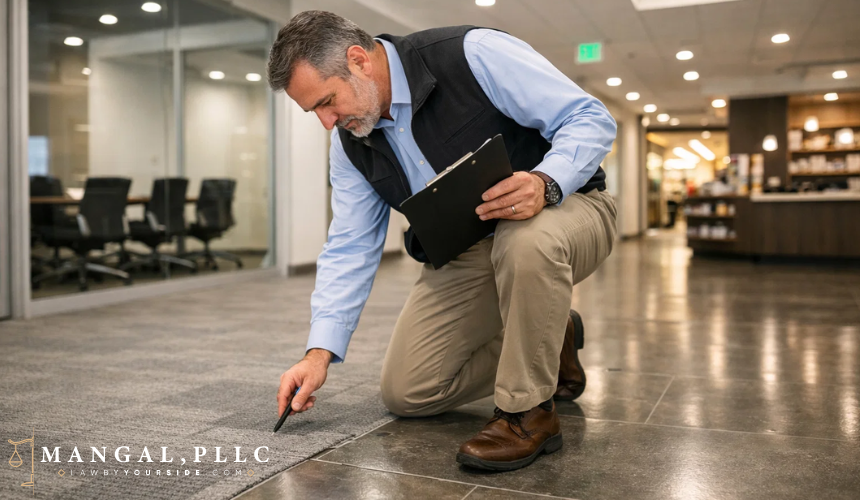
Premises liability holds property owners and occupiers responsible for injuries caused by unsafe conditions on their property. The core principle is direct: if you own or control a property, you have a legal duty to keep it reasonably safe for the people who enter it.
That duty isn’t the same for everyone who walks through the door. Florida law divides visitors into three categories, and the protection you receive depends on which category applies to you.
Who Is Protected Under Florida Premises Liability Law?
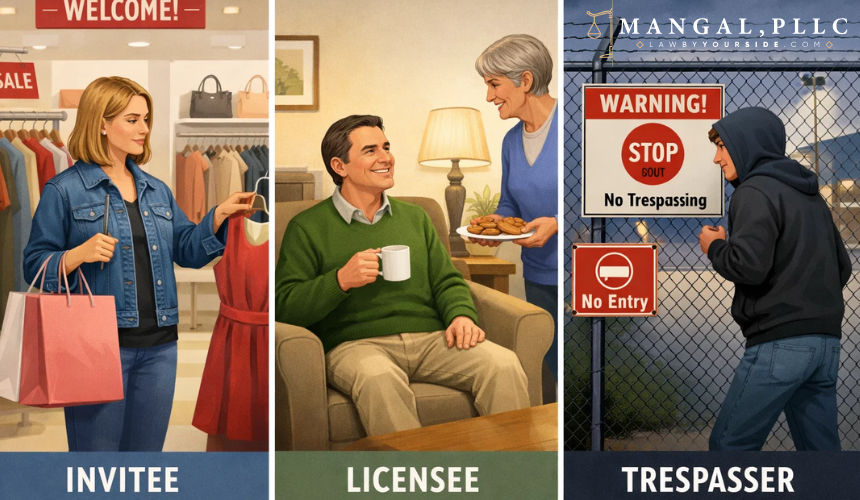
Invitees: Highest Duty of Care Under Florida Law
You’re an invitee if you enter the property for a business purpose or because the property is open to the public.
Property owners owe invitees a meaningful set of duties:
- Regularly inspect the property
- Fix known hazards promptly
- Warn visitors about dangers
- Maintain the property in a reasonably safe condition
Under Florida Statute §768.0755 – premises liability law if a hazard existed long enough that the owner should have discovered it, liability can be established through constructive knowledge. For expert guidance, consult a premises liability attorney
Licensees: Limited Duty of Care Explained
Licensees must be warned about known dangers, but property owners are not required to actively inspect for hazards.
Licensees are people who enter a property for social or personal reasons with permission.
Trespassers: Legal Exceptions and Child Safety Laws
Trespassers have limited protections, but property owners must avoid intentional harm and may be liable for injuries to children.
The major exception is children. Under Florida Statute §515 – Residential Swimming Pool Safety Act property owners must follow safety requirements such as fencing and self-closing gates.
What Is a Slip and Fall Case in Florida?
A slip and fall case involves injuries caused by hazards like wet floors, uneven surfaces, or poor lighting.
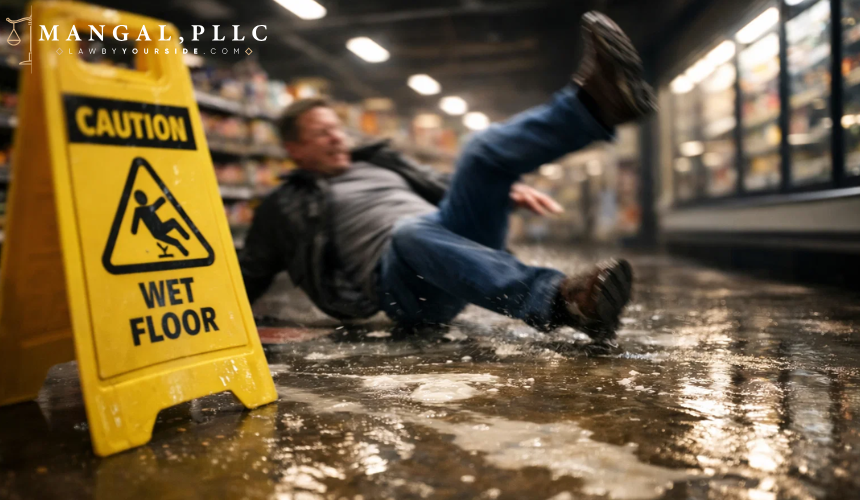
A slip and fall is one specific type of premises liability claim.
Key Statistics:
- Over 8.8 million emergency room visits annually are caused by falls — see CDC fall injury facts.
- Falls are the leading cause of traumatic brain injuries — according to National Safety Council.
- Falls are a top cause of fractures and hospitalizations, especially among older adults.
These numbers highlight how serious and common these accidents are.
Common slip and fall hazards include:
- Wet floors
- Uneven sidewalks
- Loose carpets
- Poor lighting
- Broken handrails
Slip and fall is the most commonly filed premises liability claim in Florida. A slip and fall is one type of premises liability claim under Florida law. If you’ve been injured, a Florida slip and fall lawyer can evaluate your case.
What Types of Cases Fall Under Premises Liability in Florida?
Premises liability includes many types of property-related injuries beyond slip and falls.

- Inadequate security: A hotel, apartment complex, or parking garage that fails to provide reasonable security — working locks, surveillance cameras, adequate lighting — can be held liable if a visitor is assaulted or robbed on the property.
- Swimming pool accidents: Drownings and near-drownings at pools that lack required fencing, gates, or supervision.
- Dog bites: Under Florida Statute § 767.04, a dog owner is strictly liable for bite injuries regardless of the dog’s history. If the bite happens on the owner’s property, it’s also a premises liability matter.
- Falling objects: Merchandise falling from a store shelf, unsecured fixtures in a restaurant, or construction debris dropping from a building.
- Elevator and escalator malfunctions: Property owners and maintenance companies can be held liable for mechanical failures that cause injury.
- Toxic exposure: Mold, lead paint, asbestos, or chemical fumes in a rental property or commercial building.
- Fires and structural collapses: Faulty wiring, code violations, or deferred maintenance leading to fire damage or building failure.
If you were hurt because a property owner failed to maintain safe conditions, your claim likely falls under premises liability — whether or not you actually fell. For legal guidance, speak with a premises liability attorney.
How Do You Prove a Slip and Fall Case in Florida?
You must prove a dangerous condition existed, the owner knew or should have known, failed to fix it, and it caused your injury.
- Dangerous condition existed
- Owner knew or should have known
- Failed to fix or warn
- Injury was caused
Florida law governing these claims is outlined in Florida Statute §768.0755.
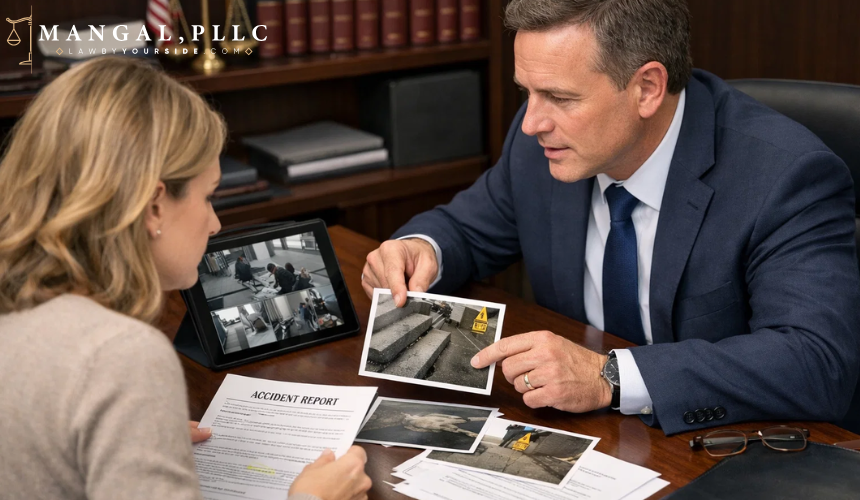
Evidence is critical in these cases, and what you do immediately after a fall can significantly impact your claim. Learn more in our guide on what to do right after a slip and fall in Florida
To better understand how fault is proven, read how to prove negligence in a slip and fall accident in Florida.
How Does Comparative Negligence Affect Slip and Fall Claims in Florida?
Your compensation is reduced by your percentage of fault, and you recover nothing if you are more than 50% responsible.
Florida’s modified comparative negligence rule applies to all negligence-based claims, including premises liability and slip and fall. If you share some responsibility for the accident, your compensation is reduced by your percentage of fault. If your fault exceeds 50 percent, you recover nothing. Learn more about how fault impacts your case from Nolo’s Florida slip and fall law guide.

Property owners routinely try to shift blame onto injured visitors: arguing you weren’t watching where you were walking, claiming the hazard was open and obvious, pointing to inappropriate footwear, or suggesting you were somewhere you weren’t supposed to be.
None of these arguments automatically defeats your claim. They can reduce your recovery. An experienced attorney knows how to counter them with evidence showing the owner’s failure was the primary cause of the accident. Recent legal changes also affect injury claims. See HB 837 and how it impacts Florida injury cases
Questions People Ask About Premises Liability and Slip and Fall in Florida
Can I sue if I slipped on a wet floor with no warning sign?
Yes. You can sue if a property owner failed to fix or warn about a hazard.
How long do I have to file a premises liability lawsuit in Florida?
Two years from the date of the injury. House Bill 837, effective March 24, 2023, shortened this from four years. Miss the two-year window and your case is almost certainly barred. Don’t wait.
What compensation can I recover in a slip and fall case?
Depending on the severity of your injuries: medical expenses (current and future), lost wages and lost earning capacity, pain and suffering, out-of-pocket costs related to treatment, and in some cases compensation for scarring or disfigurement. To understand timelines, read how long slip and fall settlements take in Florida.
Can I file a claim if I was injured on government property?
Yes, but claims against government entities follow special rules under Florida’s sovereign immunity statute. You may need to provide written notice within a specific timeframe, and there are caps on recovery without a special act of the legislature. An attorney familiar with these requirements can help you navigate them.
What if the property owner says I was trespassing?
You may still have a claim depending on the situation. Your visitor status affects the level of duty the owner owed you, but it doesn’t eliminate liability entirely. Even trespassers are protected from intentional harm and certain hidden dangers. If the facts show you were actually an invitee or licensee, the owner’s argument collapses. The classification depends on the circumstances, not the owner’s opinion of them. For strong legal support, contact a Florida slip and fall lawyer.
Injured in a Slip and Fall Accident in Florida? Get Legal Help
Premises liability cases require fast action, detailed evidence, and a firm understanding of Florida’s duty-of-care rules. Whether you slipped on a wet floor at a retail store, tripped over broken pavement outside a restaurant, or were injured because of a property owner’s failure to maintain safe conditions, you may have a valid claim worth pursuing.
In short: Premises liability is the legal framework, and slip and fall is one of the most common types of claims within it.
At MANGAL, PLLC – Florida Personal Injury Law Firm, Attorney Mangal personally oversees every case. We’re available 24/7, rated 5 stars on Google and Avvo, and trusted by more than 1,000 clients across Central Florida. Contact us for a free consultation. Whether your accident happened in Clermont, Orlando, or anywhere in Central Florida, we’re ready to stand by your side.